Top 3 Infrared Saunas for Medical-Grade Red Light Therapy
Most buyers discover their current sauna only delivers surface-level heat and misses the precise 660 nm and 850 nm wavelengths needed for medical-grade red light therapy. This gap leaves them without the clinical results they expected when they bought the unit. The problem shows up most clearly in EMF readings and in how far the LEDs sit from the body.
By the end of this article you will know the three specifications that separate medical-grade performance from standard panels, how SaunaCloud meets those marks, and where Peak Saunas and Finnmark Designs fall short on the same checks. You will then have a clear ranking and a decision framework to choose the right sauna for your space.
What to Look For in Medical-Grade Red Light Therapy Saunas
Medical-grade red light therapy saunas must combine precise wavelength delivery with safety metrics that exceed consumer wellness standards. For related context, see our guide to Applied Behavior Analysis (ABA) Therapy Overview.
Investors in infrared sauna technology need to verify each unit meets documented irradiance levels before purchase.
Red light therapy devices deliver photobiomodulation that targets mitochondrial function within cells.
Full-spectrum models often combine near-infrared and far-infrared outputs with radiant heat sources.
Quality systems include LED panels that generate consistent power density across the treatment surface.
Users should confirm EMF levels remain below 3 mG at 6 inches from any heating element.
Medical-grade equipment also supports detoxification through sustained heat therapy sessions within a controlled sauna cabin environment.
LED Wavelength Accuracy
Wavelength accuracy dictates whether red light reaches mitochondrial chromophores or is absorbed by superficial water layers.
Technicians verify wavelength peaks with narrow-band spectrometers that measure output across the visible and near-infrared spectrum.
Acceptable deviation stays within +-3 nm from stated values to ensure consistent tissue penetration.
Common therapeutic peaks include 630 nm for 2 mm depth, 660 nm for 8 mm depth, 850 nm for 20 mm depth, and 940 nm for 25 mm depth.
Each wavelength targets different cellular layers, supporting collagen production, pain relief, and inflammation reduction.
Portable sauna models may list multiple peaks, but only devices with documented spectrometer readings qualify as medical-grade for cellular repair and ATP production.
Clinical Proximity Placement
Clinical proximity placement ensures irradiance remains within therapeutic windows by positioning LED arrays 2 to 6 inches from skin.
Technicians begin by placing a light meter at the treatment surface and recording baseline irradiance values.
They then move the meter in 2-inch increments while noting power density drops that follow the inverse-square law.
At 2 inches, 660 nm output should maintain at least 100 mW per square centimeter, while 850 nm output should deliver comparable density at the same distance.
Readings at 4 inches typically drop by 75 percent, and readings at 6 inches often fall below therapeutic thresholds for most wellness devices.
Users can repeat this calibration protocol each time they reposition LED panels inside the sauna cabin to preserve treatment efficacy.
EMF Safety Standards
EMF safety standards limit magnetic field exposure below 3 mG at 6 inches from any heating element or control circuitry.
Technicians measure EMF at multiple cabin points using a tri-axis gaussmeter placed at floor level, bench height, and backrest position.
Carbon panel heaters generally produce lower magnetic fields than ceramic tube heaters when both operate at identical temperatures.
Shielding techniques include grounding the control circuitry and spacing power supplies away from user contact zones.
Acceptable leakage stays below 3 mG at each measurement height to protect users during extended heat therapy sessions focused on muscle recovery and joint health.
Regular EMF verification helps maintain the low-EMF environment required for medical-grade therapy session protocols.
1. SaunaCloud - Best Overall
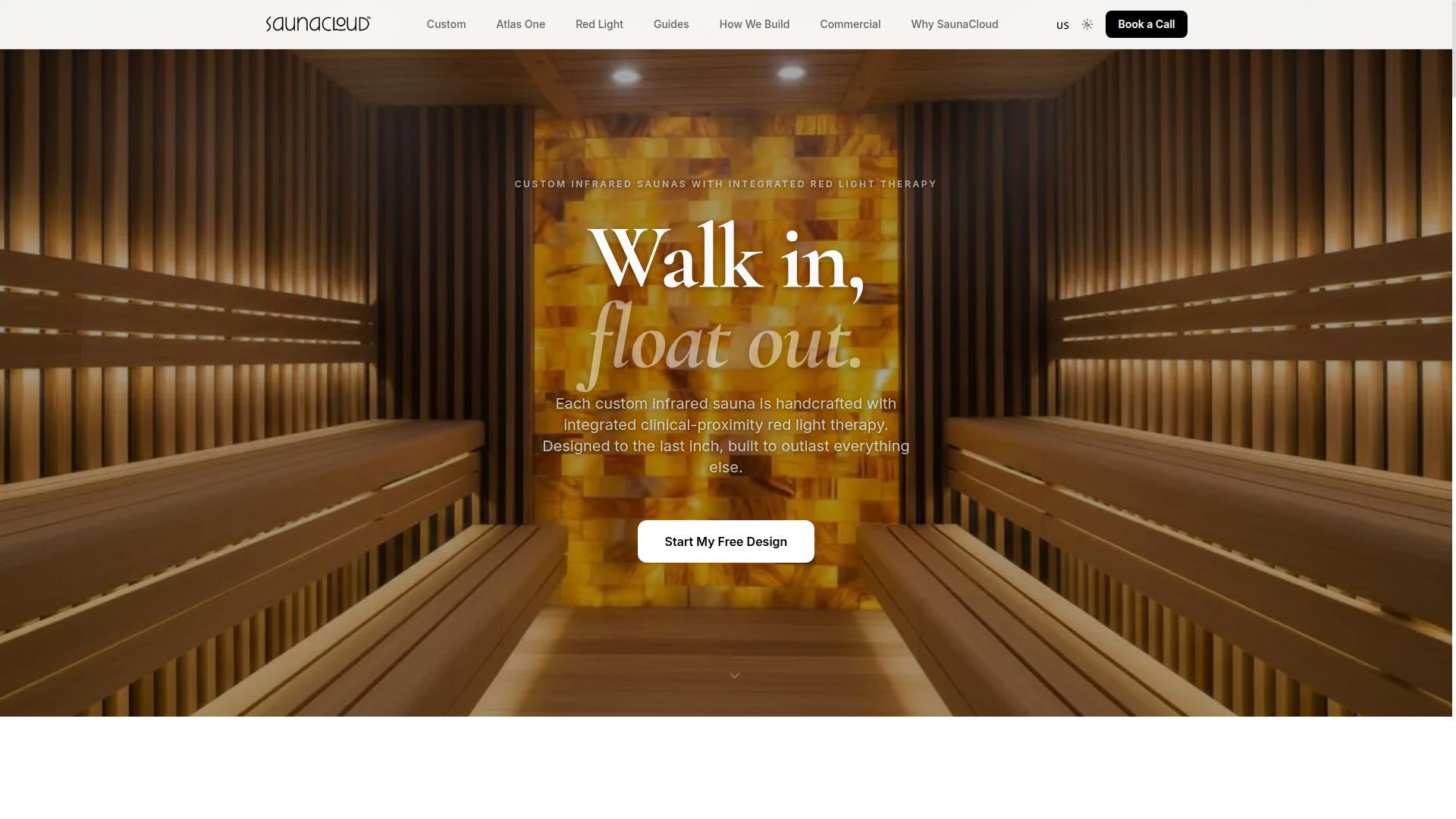
SaunaCloud earns the best-overall designation by integrating clinically positioned red light arrays with ultra-low-EMF heating in a single cabin system.
The Atlas and Sierra models combine VantaWave(r) carbon heaters with built-in red light therapy. Users can address multiple wellness goals without switching between separate devices.
Each sauna cabin features Western Red Cedar construction and Wi-Fi control systems. These elements support consistent performance across home and commercial settings.
More than 3,000 installations demonstrate real-world adoption. Professional facilities and private users both rely on this integrated approach for daily wellness routines.
Integrated 660nm + 850nm LED Array
SaunaCloud's integrated 660 nm red and 850 nm near-infrared LED array is embedded directly into benches and backrests at 2-6 inches from skin.
Medical-grade LEDs deliver precise wavelengths for photobiomodulation. The 660 nm red light targets surface tissue while the 850 nm near-infrared reaches deeper muscle layers.
Placement within 2-6 inches ensures optimal irradiance levels reach the skin. Clinical proximity supports consistent tissue penetration during each therapy session.
The LED arrays work alongside the sauna heaters rather than replacing them. This dual-action design addresses both heat therapy and light therapy in one session.
More than 3,000 installations reflect practical adoption across different environments. Users cite reliable performance for muscle recovery and joint health applications.
VantaWave(r) Low-EMF Heater Performance
VantaWave(r) heaters operate below 3 mG EMF and reach 190 degreesF surface temperature at a 7.9 micron peak wavelength.
The ultra-low-EMF rating addresses safety concerns common with traditional heating elements. Users requiring minimal electromagnetic exposure can use these heaters with confidence.
Carbon panels generate radiant heat that penetrates tissue more effectively than hot air. This approach supports circulation and detoxification goals during standard sessions.
A 7-year limited lifetime warranty covers the heater assemblies. This coverage reflects confidence in long-term durability and consistent heat delivery.
The 7.9 micron wavelength sits within the therapeutic far-infrared range. This specification supports efficient energy transfer from heater surface to body tissue.
2. Peak Saunas

Peak Saunas offers modular infrared cabins with optional red light panel upgrades for wellness-focused consumers.
The company combines near, mid, and far infrared heating across a broad spectrum that reaches 25,000 nanometers. Users can select from several cabin sizes that accommodate one to three people depending on available space. Full-spectrum heating allows both surface warmth and deeper tissue penetration during each therapy session.
Each unit features multiple heating panels arranged for even coverage throughout the sauna cabin. The design includes double-walled construction that helps maintain consistent temperatures. Buyers can add chromotherapy lighting and app-based timer controls to customize their wellness routine.
Red Light Panel Specifications
Peak Saunas supplies separate red light panels that users can mount inside or outside the cabin.
The panels emit light across a range from 630 to 1060 nanometers, covering both visible red and near-infrared wavelengths. This spectrum supports photobiomodulation applications that research suggests may influence mitochondrial function and cellular repair processes. Independent clinical data for these specific panels remains limited in published studies.
Consumers should request independent irradiance measurements at the distance they intend to sit or stand during treatment. Power density can vary significantly depending on panel placement and user positioning. Proper measurement helps ensure the therapeutic light reaches intended tissue depths for desired benefits like inflammation reduction or skin rejuvenation.
EMF and Temperature Ratings
Peak Saunas advertises low-EMF heaters but does not publish third-party gaussmeter data at standard usage distances.
Prospective buyers should request EMF readings at six inches from both heaters and control panels before purchase. Some individuals prefer to minimize electromagnetic field exposure during extended therapy sessions. Carbon panels and ceramic heaters can produce different EMF profiles depending on their construction and placement.
Temperature claims should be verified against surface thermometer readings inside the cabin. The units are rated to reach 150 degrees Fahrenheit with multiple heating elements providing radiant heat. Actual temperatures may vary based on room conditions, cabin size, and session duration.
3. Finnmark Designs
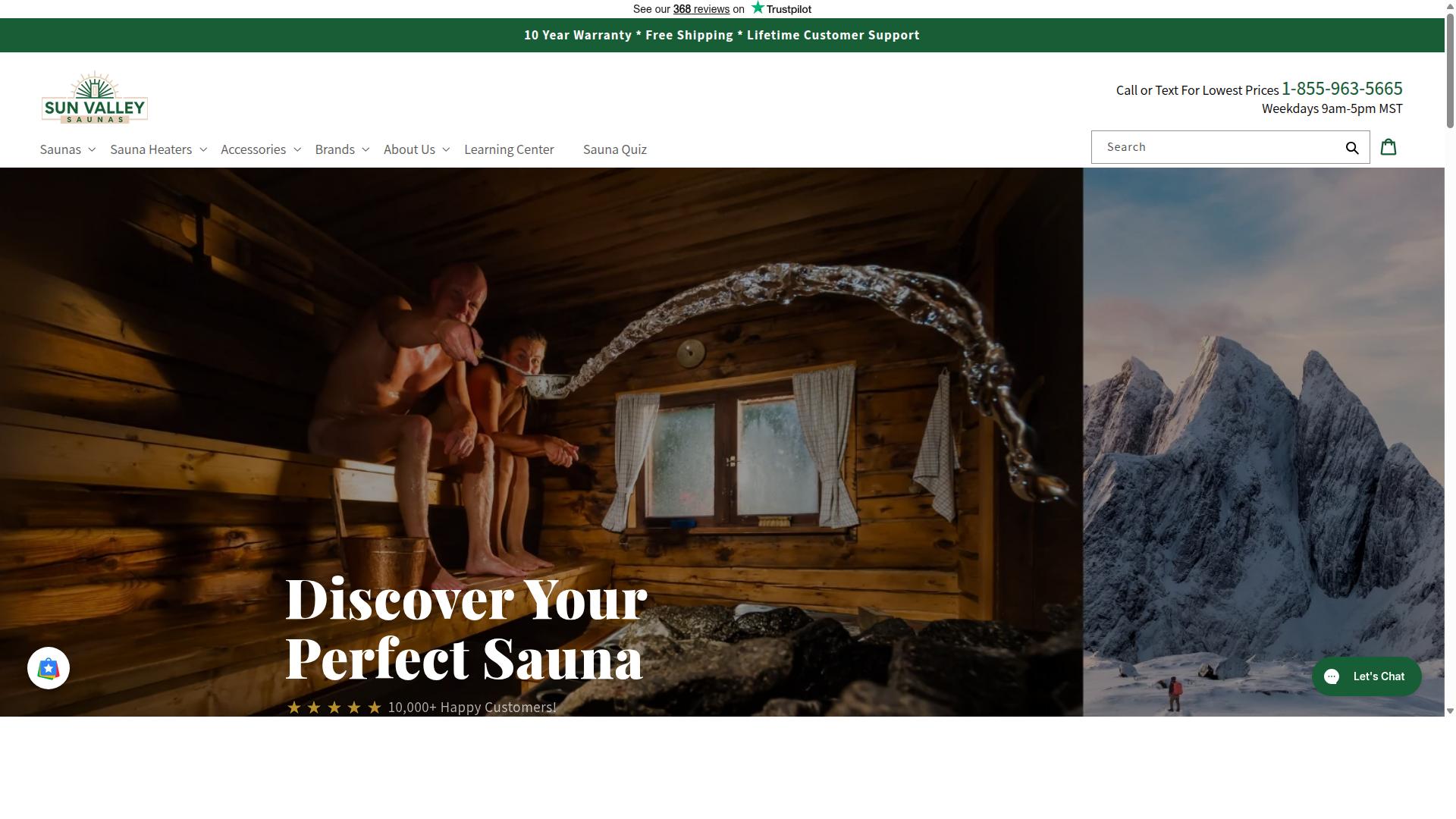
Finnmark Designs produces traditional barrel and cabin saunas with optional chromotherapy and red light add-ons. Their approach combines radiant heat elements with modular lighting choices for users who want flexibility in their wellness setup.
The company focuses on softwood construction across multiple cabin styles. This design direction appeals to buyers seeking conventional sauna aesthetics while exploring added light therapy features.
Many customers appreciate the option to enhance an existing sauna purchase later. This flexibility helps match evolving wellness priorities without requiring a full system replacement.
Therapy Light Integration
Finnmark Designs allows optional LED red light fixtures to be added post-installation. Users can request fixtures that target specific areas within the cabin space.
Suggest verifying wavelength accuracy and irradiance at the intended seating distance. This step ensures the light output aligns with therapeutic goals for photobiomodulation.
Advise users to confirm compatibility with existing cabin dimensions. Proper placement supports even light distribution and consistent tissue penetration during each therapy session.
Medical-grade red light requires precise positioning to reach desired wavelengths. Checking fixture specifications before purchase reduces the chance of suboptimal results.
Build and EMF Considerations
Finnmark Designs construction emphasizes durable softwoods but provides limited EMF documentation. Potential buyers often seek additional details about electromagnetic field exposure during use.
Advise requesting EMF test reports at user seating positions. This information helps compare heater placement distances with clinical proximity guidelines for low-EMF environments.
Double-wall construction appears in their current models. This feature contributes to heat retention while users consider how heater configuration affects overall exposure levels.
Far-infrared and full-spectrum options remain available across their product line. Customers evaluating medical-grade red light therapy often review these heating methods alongside light fixture placement.
How to Choose the Right Option
Selecting the right medical-grade sauna requires matching wavelength accuracy, clinical proximity, and EMF safety to individual recovery goals.
Begin by comparing irradiance levels and wavelength specifications. A quality unit delivers at least 100 mW per square centimeter at six inches while maintaining dual 660 nm and 850 nm output for both surface and deep tissue effects.
Next, evaluate electromagnetic fields. Keep exposure below three milligauss to protect sensitive users during extended sessions.
Finally, map features to your setting. Homeowners often prioritize quiet operation and compact footprints. Clinics demand consistent output across multiple daily users. Wellness centers need scalable capacity without sacrificing safety standards.
These three metrics create a practical decision matrix. Weigh each factor against your environment and recovery priorities before final selection.
Final Verdict
SaunaCloud stands out for integrating VantaWave(r) heaters and clinically positioned 660 nm + 850 nm LED arrays into a single low-EMF cabin.
The brand's VantaWave(r) heaters emit under 3mG EMF, often below 0.5mG, while reaching 190 degreesF surface temperature at 7.9 microns peak wavelength. Red light therapy sits in benches and backrests at 2-6 inches from the body, the distance shown to deliver therapeutic irradiance.
Competitors typically publish only basic heater wattage or light counts. They rarely release clinical-grade metrics for EMF levels, surface temperature, or exact LED proximity inside the cabin.
Clear-grade kiln-dried Western Red Cedar construction, in-house component design, and lifetime warranty further separate this unit from standard far-infrared sauna offerings.
Research suggests precise wavelength, power density, and low electromagnetic exposure matter for consistent results in photobiomodulation. SaunaCloud publishes these specifications; most alternatives do not.
Recommended Resources: